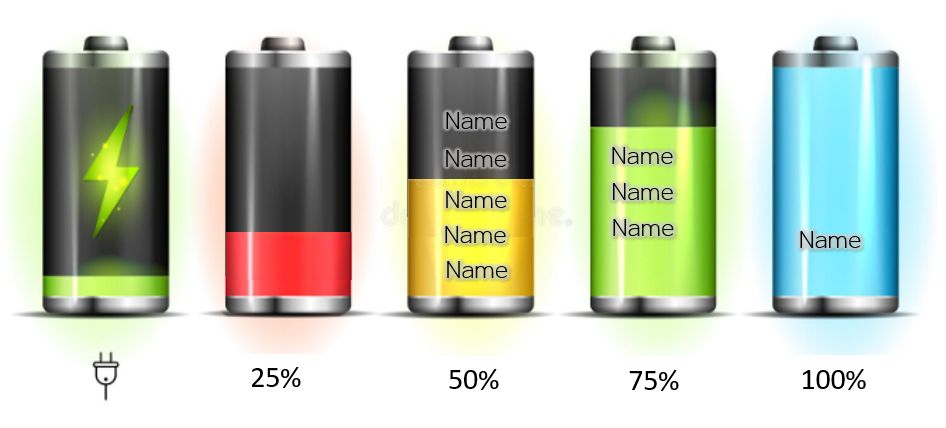
Battery Check ... How are YOU?

Battery Check ... How are YOU?

Battery Check ... How are YOU?
Simple, classic brainstorming with two variants. Popcorn - where participants speak out-loud and Round Robin - where participants work in silence and pass their ideas to the next person in turn.
Campfire leverages our natural storytelling tendencies by giving players a format and a space in which to share work stories—of trial and error, failure and success, competition, diplomacy, and teamwork. Campfire is useful not only because it acts as an informal training game, but also because it reveals commonalities in employee perception and experience.
A positive and uplifting icebreaker that encourages team members to reflect on achievements, recognize each other’s contributions, and build a culture of appreciation.
Being right is not the end goal, being able to rationalize your choice is.
cultureQs is a Change and Integration accelerator activity that uses powerful Questions to inspire participants to reflect on the foundations of their beliefs, attitudes and behaviours.
Customer experience mapping is a method of documenting and visualizing the experience a customer has as they use the product or service. It also maps out their responses to their experiences.
To be used when there is a solution (even in a conceptual stage) that can be analyzed.
A tool that helps a designer assess the demands a product/design puts on the user. This tool can be used by anyone creating a product, design, or service and wants to critically assess its demand on users.
In the Desert Island Game, begin by asking your participants an important question – if you were stranded on a desert island, what essential items would you choose to survive?
Participants are given a list of items to choose from and must work together to decide which items will help them stay alive.
The Desert Island Game is a great, remote-friendly exercise for a team to work together and share opinions.
La pianificazione dell'accettazione e della risposta alle domande è una delle parti più difficili dello svolgimento di una riunione, un workshop o una presentazione. Ci sarà abbastanza tempo per le domande e risposte? Il pubblico è disposto a fare domande? Quante domande faranno? Accetto le domande alla fine o per tutto il tempo? Come faccio a sapere se alle domande è stata data una risposta utile?