Drawing Together
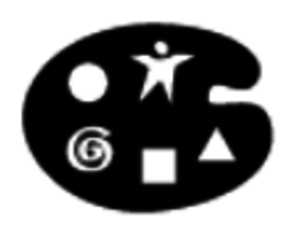
You can help people access hidden knowledge such as feelings, attitudes, and patterns that are difficult to express with words. When people are tired, their brains are full, and they have reached the limits of logical thinking, you can help them evoke ideas that lie outside logical, step-by-step understanding of what is possible. Stories about individual or group transformations can be told with five easy-to-draw symbols that have universal meanings. The playful spirit of drawing together signals that more is possible and many new answers are expected. Drawing Together cuts through the culture of overreliance on what people say and write that constrains the emergence of novelty. It also provides a new avenue of expression for some people whose ideas would otherwise not surface. This structure brings to life LS principle #7, Emphasize Possibilities: Believe Before You See.

Goal
Reveal Insights and Paths Forward Through Nonverbal Expression
Materials
Instructions
Five Structural Elements – Min Specs
1. Structuring Invitation
“Who needs words when we have symbols? Let’s ditch the dictionary and use five symbols to tell a story about a transition or challenge we are experiencing.”
2. Space and Materials
- Chairs with access to a table or writing surface for each participant.
- Paper and markers for each participant [shared digital drawing space].
- [Symbols handout. Breakouts of two.]
3. Participation Distribution
- Roles include host [tech host], artists, and viewers.
- Minimum group size is two.
- Everyone is invited to create and share drawings.
4. Group Configuration
- Alone,
- Pairs
- Whole group for debrief (using 1-2-4-All for large groups)
5. Steps and Time Allocation
Intro: Share the structuring invitation. (1 min.)
Symbol Introduction: Introduce the five symbols and their meanings, drawing each. [Display symbols handout.] (5 min.)
- Circle. Wholeness, completion, and the self
- Rectangle. A foundation, offering support and stability
- Triangle. Goals, aspirations, and achievement
- Spiral. Change, transformation, and the cyclical nature of life
- Star person (equidistant cross). Relationships and connections
Symbol Practice: Participants practice drawing the symbols to get comfortable with them. (3 min.)
First Draft: Participants weave the symbols into a visual story about a challenge they are facing or a transition they are making. No words allowed! (10 min.)
Second Draft: Participants refine their drawings in a second draft, experimenting with size, placement, and color to add depth and drama. (10 min.)
Silent Interpretation: Participants form pairs [breakouts] to share and interpret each other’s drawings. The artist stays silent as the viewer interprets the story. After both share, they discuss their intended meaning. (5 min.)
Remix and Repeat: Participants switch partners [new breakouts] and repeat the silent interpretation process twice. (5 min. per pair; 10 min. total)
All-Together Sharing: Everyone returns to plenary. Ask a few people to share their drawings, then ask the group to reflect on common themes. (5 min.)
WHY? Purposes
- Reveal insight or understanding not accessible with verbal or linear methods
- Tap all the sources of knowledge for innovation (explicit, tacit, latent/emergent)
- Signal that a quest or journey in search of new discoveries is under way
- Develop and deepen shared understanding of a vision or complex dynamics
- Create closer connections among group members
Taking it online
There are two options: (1) Participants can draw on paper and show their work via webcam, in which case, instruct them to draw with a bold marker and turn off background effects that could blur or obscure their drawing; or (2) Use a shared digital whiteboard with pre-populated shapes. Note that this option may not work well on small screens.
Tips and Traps
- Remind participants that the drawing is not the object by saying, “Refined drawing skills are not required—get over your need for perfection! Childlike drawing looks playful and captures the imagination of others!”
- Don’t help too much with drawing skills
- Help participants accept whatever emerges in the drawings (there are often surprises)
- Draw or present an example of a story that helps others make a leap of understanding
- Record the participants drawing with cameras and video recorders
- Return to the drawings when you reconvene as a group
- Remember that drawing can be powerfully therapeutic; be prepared for emotional responses
- Online, show the host drawing the symbols if possible.
Riffs and Variations
- Have one person use the symbols to visually map conversations during a meeting (then add words if necessary).
- Display participants’ images in a gallery for a kaleidoscopic view of everyone’s challenges.
- Return to the drawings when you reconvene as a group to help lift off from where you left off.
Examples
- For a refreshing change of pace in a long meeting when a creative burst is needed
- When there are strong differences in perspective and the group is in a rut
- For visual facilitation of a meeting or conference, where drawings are created as the conversation unfolds
- For revealing obscure or hidden relationships when working on a complex project (e.g., one doctoral student had a eureka moment via Drawing Together)
- For helping a vision statement come to life (particularly for visually oriented people)
- For individual work, to visualize tacit or latent approaches to a challenge
Optional String
To deepen self-discovery, string with Future~Present, Spiral Journal, and 9 Whys.
Attachments
- Drawing Together Resources (Slides).pptx
- Drawing Together cover.PNG
Background
Attribution: Liberating Structure developed by Henri Lipmanowicz and Keith McCandless. Inspired by David Sibbet (The Grove) and Angeles Arrien (see Signs of Life).
Source Liberating Structures