Back-to-back listening
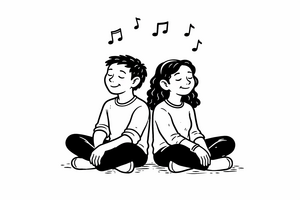
Practice deeper listening and empathy by experiencing the same stimulus from two perspectives. Partners sit back-to-back and first listen individually to a short piece of music, noticing their internal experience through body, emotions, and thoughts.
They then describe their experience to each other in detail before listening again — this time through the lens of their partner’s description. By shifting from “my experience” to “your experience,” participants practice perspective-taking, empathy, and disciplined attention.
This simple structure builds the micro-behaviors that strengthen understanding, improve collaboration, and enhance the quality of insight gathered from others.

Goal
Practice deeper listening and empathy with colleagues
Instructions
- Invite each person to listen to the music deeply, noticing how you are experiencing the piece through your ears, mind, body, skin, cells, etc. As the music plays, pay attention to your experience of the music. What do you notice about it? Feel free to close your eyes. It may help you drop into the music.
- Play the music at a nice high volume. (max 2-3 minutes duration). Recommended: use 2-3 minutes of pieces without many words.
- When the music concludes, people turn to each other, and each person has 90 seconds to describe their experience of the music.
What did you hear? What did you experience? Go into detail.
- When both people finish, have everyone turn back-to-back again and put on the same piece of music. This time listen to it based on your partner's description of their experience. Listen to it through their ears.
- Music concludes, debrief in pairs.
What was the experience like the second time through? What happened?
- Finish with a full group debrief. Observations that often come up: It's hard (Yes! Empathizing is) and it is possible. It's liberating (Yes! Empathy unleashes our imaginations). The two experiences weave together (Yes! The other person's story gave us clear constraints and we filled in all the ancillary details)
Facilitator Notes:
- This can be done in preparation for interacting with customers or researching their deeper needs. The empathy element is important but it is far from exclusively about this. You can ask, “What might this mean for our work with assessing needs of __ (clients, employees, students, patients…) and improving our work together?
- You can punctuate another, more purposeful Liberating Structure like Drawing Together or HSR or WINFY or Appreciative Interviews. B2B is good for practicing empathizing with another person. Drawing Together gives you the experience of having someone else empathize with your visual story.
Note: it is important to link this activity to a serious purpose. You are practicing the micro-behaviors that shape the quality of data you get from your customers. You are becoming more capable of learning at the feet of your clients by walking in their shoes.
Attachments
- listening.png
Background
This is part of the Liberating Structures body of work, currently "in development" (as of 2026). To learn more about "in development" Liberating Structures: https://www.liberatingstructures.com/ls-in-development/