Training Needs Assessment Template
Training Needs Assessment Template
163
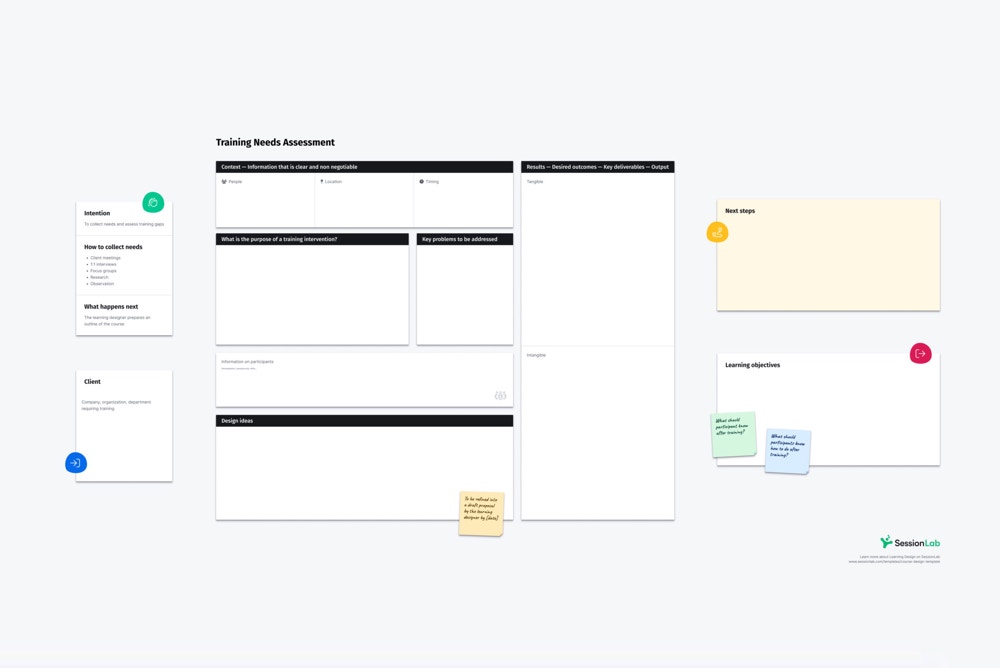
This template makes the process of preparing a Training Needs Assessment easier by laying out each step to be covered. You are looking to answer the following questions:
- what problem are you aiming to solve with this training intervention?
- who is the course's target audience?
- what are their needs?
To collect Training Needs you'll need to gather information from the client as well as from prospective participants. In this template, you'll find inspiration on how to run 1:1 interviews as well as a structured focus group.
Duration: Any
Participants: Any


View Template
Use Template
Author
James Smart is Head of Content at SessionLab. He’s facilitated workshops and designed elearning experiences for places including the University of East Anglia and the National Centre for Writing.
At SessionLab, we are passionate about facilitation. We believe good workshop design leads to better collaboration, enabling people to achieve great things.
SessionLab is the go-to platform for session design, with an agenda planning tool, library of facilitation resources and vibrant community for facilitators. It enables facilitators to streamline workshop design through drag-and-drop scheduling, automatic timing and seamless sharing with clients and colleagues.
More about author