Polak Exercise
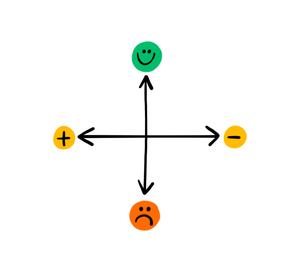
Named after futurist Fred Polak, this reflective exercise asks participants to consider how they see the future, whether it’s bright or bleak, and how those images shape the present. It helps surface underlying assumptions and emotional responses to change.

Goal
To uncover participants’ existing mental models of the future, and to explore how these influence thinking, motivation, and decision-making.
Materials
Instructions
Version 1: Reflective (Classic)
1. Invite participants to reflect silently on two questions:
◦ What is your image of the future?
◦ How does that image affect how you feel and act today?
2. Allow 5–10 minutes for writing or sketching.
3. Ask participants to share their reflections in pairs or small groups.
4. Bring the group together and discuss: What patterns emerged? Were the images hopeful, fearful, conflicted? How might these affect your work?
Version 2: Matrix (Visual)
1. Draw or display a 2x2 grid. One axis is Optimism → Pessimism about the future. The other is High Agency → Low Agency (how much influence you feel you have).
2. Ask participants to place a sticky dot or mark where they currently feel they sit.
3. Step back and observe the distribution. Prompt a discussion:
◦ What do you notice?
◦ How do different views affect collaboration?
◦ What might shift these positions?
4. Optionally, invite participants to share what brought them to that point, and what might move them closer to a different quadrant
Facilitation tips
- Make space for a range of emotions and perspectives. It’s fine if not everyone feels optimistic.
- Emphasise that there are no right or wrong answers. This exercise is about awareness, not judgment.
- Avoid moving too quickly into “fixing” mode. This is about noticing, not solving.
- Consider doing this early in the session to help build awareness and openness before introducing tools and frameworks.
- If using the matrix, be mindful of how visible placement might affect responses. Offer a digital or anonymous version if needed.
- Use this exercise to build empathy: different people bring different images of the future, shaped by their experience, context, and role.
Attachments
- icon_polakexercise.jpg
Background
Based on the work of Dutch futurist Fred Polak, who argued that “the image of the future is the strongest force shaping a culture.” This method turns that insight into a group reflection, adapted for futures workshops across sectors.