Ethos, Logos, Pathos
Ethos, Logos, Pathos
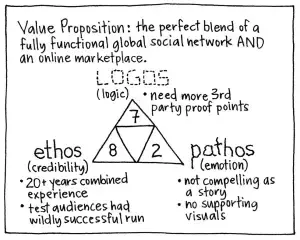
The goal of this game is to channel Aristotle’s assessment of your argument.
Duration: 10m - 60m
Participants: 1 - 10
Difficulty: Low

Instructions
Aristotle laid the groundwork for persuasive communication in the 4th century. Although the times have changed, effective communication hasn’t. Evaluate a communication, such as a value proposition, by using the three elements of rhetoric. Role playing as your audience, score your message from 1 to 10 on these categories:
- Ethos/Credibility: Who are you, and what authority do you have on the topic?
- Logos/Logic: How clear and consistent is your reasoning? How do your facts measure up against my facts?
- Pathos/Emotion: How vivid, memorable, and motivating is your message?
Look for areas of improvement or imbalance.
Attachments
- Ethos-logos-pathos-cover.webp
Background
The Ethos, Logos, Pathos game is credited to James Macanufo.
Author
Gamestorming is a set of co-creation tools used by innovators around the world.
Think back to the last time you played a game. What was the game? Why did you choose to play? Was it a simple game like tic-tac-toe, or something more complex, like Monopoly, Scrabble or Chess? Or maybe it was a game of basketball? Did you play with friends? With family? Try to recapture the feeling you had as you played the game. How did it feel? Would you like to have more of that feeling at work?
Games come naturally to human beings. Playing a game is a way of exploring the world, a form of structured play, a natural learning activity that’s deeply tied to growth. Games can be fun and entertaining, but games can have practical benefits too.
These games are designed to help you get more innovative, creative results in your work. We’ll show you not only how to play them but how to design them so they fit your own specific work goals.
More about author0 Ratings
No ratings yet.